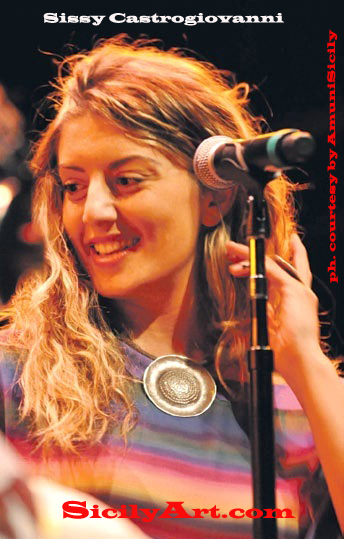
Sissy Castrogiovanni was born in Catania, but is considered a citizen of the world!
She has Sicilian blood in her veins but an international flare in her voice.
Castrogiovanni holds a degree in "Jazz Composition and Mediterranean Studies" at the
Berkley College of Music in Boston. She collaborates with the University of Valencia
(Spain) and sings on many stages throughout Europe. A great talent, Castrogiovanni's voice
is also appreciated by the distinguished audience of the European Parliament in Brussels.
Her passion for jazz, one of the most sophisticated of musical genres, and the singer's
extraordinary tenacity, have enabled her to leap right into the limelight alongside such
internationally renowned artists as Jazz drummer
Jack De Johnette, Ten-time Grammy award winner Bobby McFerrin, and one of the greatest
pianists of boogie-woogie in the world, Jo Bonshack – just to name a few! The famous Spanish composer
and guitarist, Javier Limon, now the producer and owner of the namesake house records, remembers well
the first time he heard her singing a popular Sicilian melody.
Mentioned on: "A voice and the piano" by Moira Lo Bianco, and written by her best friend:
"..cleaving the air with words that cut like sharp knives and ...thanks to her interpretation we have discovered the world of traditional music from the island, full of melodies and sounds worthy of attention from her fans. Sissy leads the world in the most ancient Sicilian lullabies and folk songs with an arrangement and a voice that go beyond the ordinary. A magical combination of commitment, perseverance, tenacity, passion and the inimitable Sicilian soul."
This is "citizen of the world" Sissy Castrogiovanni.
In the world of music it is often said that hearing is believing. Take a listen for yourself at: www.sissycastrogiovanni.com
from AmuniSicily.com #4 edited by Vanvakys
Related link: SicilyArt.com,
Siciliana Cities and Villages,
Berkley College of Music
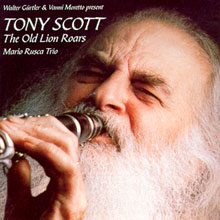
I am Tony Scott. The Story of How Italy Got Rid of the Greatest Jazz Clarinetist
Tony Scott "The story of greatest Jazz clarinet proudly Sicilian forgotten by his own people"
Famus quotes: "I decided a long time ago I would rather be a jazz musician than rich and famous. "I never regretted that decision." "Jazz is Black, why? What is spaghetti?
Anthony Joseph Sciacca, June 17, 1921 - March 28, 2007, was a jazz clarinetist known for an interest in folk music around the world. Born in Morristown, New Jersey, Scott's parents emigrated from Salemi, Sicily at the turn of the century. His mother played violin, his father guitar, and by age 12, Scott began studying clarinet, influenced by the sounds of Clarence Hutchenrider, Benny Goodman, and Artie Shaw. Scott attended Juilliard School from 1940 to 1942, receiving instruction in clarinet, piano, and composition, and building a strong background in classical music. Drafted into the United States Army in 1942, he was stationed at Governor's Island in New York harbor and spent his spare time immersed in the jazz scene on 52nd Street.
In the 1950s he worked with Sarah Vaughan and Billie Holiday. Billie and Tony had a long relationship, so intimate sometimes that everybody gossiped to be lovers, "She never did anything bad to me". He also had a young Bill Evans as a side-man, bringing him from the Classical Music to the Jazz world . In the late 1950s, he won the Down Beat Critics poll for clarinetist in 1955, 1957, 1958, and 1959.
Over the past 50 years, he arranged the hit "Day-O" for Harry Belafonte, "de, isede, isede, isedoo! It's my idea but I wasn't interested on royalties or else: you know how much money I waould have made with this?. Tony "studied traditional music in Japan, , recorded the first New Age album, and lived in three different countries
His most musically transforming event occurred in 1943 when he saw Charlie "Bird" Parker play for the first time. "My mouth dropped," Scott told Matthew Landan of the Herald Tribune. "He played so many notes that it sounded like ... Chinese music from the moon." Scott and Parker later became friends, being so talented", Tony was the only "non African-American allowed to be on the stage with him ". Parker and Scott opened and played together in a Jazz club on 52nd Street for one year.
Scott played and recorded with Dizzy Gillespie, Sarah Vaughan, and Charlie Parker in the late 1940s, and by 1954, led his own quartet in a successful run at Minton's Playhouse, the location that gave birth to be-bop. "By the early 1950s he had developed a far more confident approach," wrote Jim Burns in Jazz on Record, "and his soloing became more intense and swinging." In 1953, Scott won the Down Beatcritics' poll as "New Star" on the clarinet.
Read more...
Laura Campisi, an award-winning songwriter and jazz singer based out of Palermo, Italy. Has performed with various musical ensembles throughout Europe, and continues to produce a wide range of music, from classical jazz, rhythm and blues to traditional Sicilian folk and African drumming.
She writes original songs in English, Italian and Sicilian.
Recent performance highlights include winning first place out of hundreds at the 2009 Lucca Jazz Donna Competition, and singing, later that year, at the Italian Embassy in Lisbon for the Festa della Repubblica.
Last October 23th, she was the Vocalist Winner of Bianca D'Aponte Award 2010 in Aversa Napoli.
In November 16th she will exhibit together with John T. La Barbera, composer, arranger, guitarist, and mandolinist during
WineAppeal.it "Art in a Bottle" - Notte Siciliana-Culture on the Table.
John T. La Barbera, composer-arranger, guitarist, and mandolinist, is the author of the first and foremost Italian mandolin book Traditional Southern Italian Mandolin and Fiddle Tunes, currently on the best sellers list from Mel Bay Publications. Awarded for his extraordinary role in the transmission and translation of Italian oral traditions from The Italian Oral History Institute, La Barbera is recognized as one of the first transcribers of Southern Italian folk music in America. More...
Made in Sicily Orchestra was born in Palermo in 2007 with the mission of enhancing the artistry of Sicilian music and musicians. Their unique creation is a fusion of symphony orchestra and a jazz section. The Orchestra�s mission is to promote Sicilian music and musicians. Today the Orchestra is comprised of 104 staff musicians, all of them Sicilian. It has performed in the most important theatres and has been lauded by the press as an ambassador of Sicily to the world.
More...
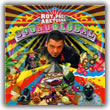
Roy Paci "SuoNOGlobal" Funny and sunny. On the one hand there is the
passion for the trumpet and the and brass section and on the other
hand the passion for raggae, ska and rocksteady: mix the whole
with a rousing rythm and finally here you are Roy Paci & Aretuska. "SouNOGlobal" is
a cd that contains all the possible warmth expressed through a
sound that brings together reggae, calypso, rocksteady, but also
flamenco, Latin and Carribean rythms. For the occasion, Roy Paci
has invented his own language composed of Spanish, Italian, French
and Sicilian dialect. The cd sees the participation of the old
friends Manu
Chao, Cor Veleno from Rome, Pau of Negrita, Raiz, Erriquez of
Bandabard�,
Caparezza and Sud Sound System. www.roypaci.it
English version by VanVakys VRC consulting
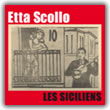
Etta
Scollo "Les Siciliens "
Born
in Catania, she worked with artists such as Eddie
Lockjaw Davis,
Sunnyland Slim and Champion Jack
Dupree, both in the recording
studio and in concerts. She attended singing seminars with artists
such as Bobby McFerrin and Sheila
Jordan. Resident in Berlin
(Germany) and Sicily, she is currently devoting herself to composing
and to exploring traditional music. This cd is the result of
the homonymous tour, a performance documenting the dreams and
reality, history and myths of her native island. For the "Festival
delle Orestiadi" in Gibellina, she composed Il fiore
splendente, a poetical- musical project drawn from an anthology
of Arabian poets in Sicily, published by Francesca M. Corrao.
The resulting cd will be released in June 2008. www.ettascollo.de
English version by VanVakys VRC consulting
Music History Storia
della Musica
The
Oriundi Contributions to the evolution of Jazz by Giuseppe Milici
Imagination and a musical lexicon that’s
all we will need to begin our journey through
the
progression of Jazz Music around the world. The importance
of Sicilian musicians in this development, as well as those
of Sicilian origin, is evident from the start.
Beginning our brief excursion through the History of Jazz
in the 1920th the first name comes in mind maybe Nick
La Rocca,
founder and
leader of one of the most famous jazz band of that time “The
Original Dixieland Jazz Band”.
Nick and his
fellows recorded, New Orleans, Louisiana, reputed to be the
first Jazz record ever produced, and were therefore instrumental
to the unfolding of what became a popular mode of musical
expression worlwide. After producing
the “absolute
first” jazz record,
the group had lot of success on tour
throughout the United
States and Europe, as well, where Jazz was relatively unknown.
Nick La Rocca was not the only
member of Sicilian origin in the “Original
Dixieland Jazz Band”; the group also included: Frank
Signorelli on
piano and Tony
Sbarbaro on drums. Consequently, it is not far-fetched
to claim that the
first Jazz record was truly an effort “Made
in Sicily”.
Continuing our imaginary trip through
jazz in time,we should mention another important step of
great importance for our
fellow Sicilians: the “Be
Bop” era. Many musicians of Sicilian origin wrote
and performed this improvisional style of jazz music, born
in New York during the WW2 era. Even though
the terrible events of the war dominated this period of history
in both Sicily and America, jazz musicians in New York continued
to work and progress, and it was during time that this new
genre emerged. Among the members of the first Be Bop band
there was a musician named George Wallington (birth
name Giacinto
Figlia), who was born in Palermo.
He was an integral part of the band, as he was not only
the
pianist,
but also the composer, and played a note worthy role in developing
this new style and, ultimately, steering
the course of jazz music.
It is imperative to mention the other members of the group
which comprised of such famous musicians as: Dizzy
Gillespie (trumpet), Oscar Pettiford (contrabass), Max
Roach (drums), Don Byas (saxophone).
By the end of the 1940's an exceptional talent had began
to draw attention: His name was Tony Scott.
Born in New Jersey as Tony Sciacca he hailed from a family
of Sicilian
immigrants with a passion for music (some of
them were
musicians). Tony was encouraged to study various
instruments including clarinet, saxophone,
piano.
By 1953 Tony Scott grew into a giant of
Jazz music, collaborating with the Duke
Ellington Orchestra, and arranging and performing for Sarah
Vaughan and Billy
Holiday. He also played several tours
in Africa and Europe, performing with great
musicians as Charlie Parker, Bill Evans, Kenny
Clarke, Benny Carter, accomplishing a
high standard of “traditional
jazz” while devoting the best of himself to the “modern
style”.
Many other names can be
mentioned by a jazz lover and
in a to up to date list we can name: Chick
Corea, Frank Sinatra, Joe Pass,
Chuck Mangione, Louie Bellson.
Clearly, these brief notes on the significance of Sicilian
musicians to the evolution of
Jazz in the world are only the beginning, and do not come
close to covering the subject. However, they are useful in
comprehending how, at a time not too long ago, some among
us in the world contributed to the “creation” of
something world-renowned and its melodies resound throughout
the world and our ears to this day. Let's hope they continue
to do so for many more. English version by VanVakys VRC consulting
Ever
since his youth, he has been captivated by every kind of music
and has sought to create new blends among the most diverse
genres by combining elements of classical, rock and jazz music,
as well as of ethnic music - characteristic of Sicily and of
others Mediterranean lands such as North Africa, Israel, the
Middle East, the Balkan States, Turkey, Andalusia. More...
He has
attracted considerable attention as Music Director and Founder of
the Chamber Orchestra of New York, established in honor of Ottorino
Respighi. Its triumphant debut was held
on 11 October 2007 at Zankel Hall, Carnegie Hall. Following the
inaugural season finale, Vivien Schweitzer of The New York Times
wrote: "The musicians played
with vigor and commitment throughout the evening, producing a polished,
rich sound."More...
Mario Biondi With
his voice stamp very close to that of the most famous Barry
White and Lou
Rawls, he sings a soul-jazz hot and
passionate,
where there are also ironic accents and arrangements of
the acid tradition.
Gabriella
Cilmi (pronounced “chill-me”)
From the sultry opening notes of the debut single “Sweet
About Me”, the world quickly has come to know this new
vocal talent traversing all manner of genre from blues, pop,
punk, glam, rock and beautiful balladry.
SeiOttavi A
group of seven voices born in 2004 in Palermo. They sing
a cappella pop and classic songs
arranged in swing key.
The execution is characterized not only by polyphony,
but
also by the reproduction with just voices of
instrumental,
sound and onomatopoeic effects.
Franco Battiato Singer-songwriter,
composer, filmmaker and (as Süphan Barzani) painter.
He is considered one of the most original personalities in
Italian music from the 1970s to now. His songs are dreamy,
controversial collages of images and sensations, very experimental
and convoluted. His collaborations (from 1994 onward)
with
the nihilistic-cynical philosopher Manlio
Sgalambro have
added further depth to his apparently nonsensical lyrics,
with references to Emil Cioran, Friedrich Nietzsche and other
anarchistic and problematic thinkers.
Carmen Consoli
The sold-out tour in March 2008 in the United States
put the final seal on her
fame overseas.
The famous (and difficult) critic of the New York Times
Jon Pareles has defined her "a magnificent combination
between a rocker and an intellectual" and also "a
voice full of compassion, pain and strength."
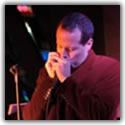
Giuseppe Milici
Harmonica player
and composer. Member of the first European Jazz Orchestra conducted
by James Newton. He performed the original soundtrack from
the movie "Il
Mago"(The Magician) starring Anthony
Quinn.
Martial Solal underlined: "Milici has the right
feeling
and shows he knows everything about jazz.”
Agricantus Their artistic path was symbolically
based
on "peace between people". Peace to
build
and rebuild with the music, with sounds and with the words,
dwelling on emotions that arise at the time of the encounter
with these people creating moments of magic sound and suspension
of time.










 In
Luce:
In
Luce: 



 The
Oriundi
The
Oriundi 


 He has
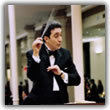
attracted considerable attention as Music Director and Founder of
the Chamber Orchestra of New York, established in honor of Ottorino
Respighi. Its triumphant debut was held
on 11 October 2007 at Zankel Hall, Carnegie Hall. Following the
inaugural season finale, Vivien Schweitzer of The New York Times
wrote: "The musicians played
with vigor and commitment throughout the evening, producing a polished,
rich sound."
He has
attracted considerable attention as Music Director and Founder of
the Chamber Orchestra of New York, established in honor of Ottorino
Respighi. Its triumphant debut was held
on 11 October 2007 at Zankel Hall, Carnegie Hall. Following the
inaugural season finale, Vivien Schweitzer of The New York Times
wrote: "The musicians played
with vigor and commitment throughout the evening, producing a polished,
rich sound."